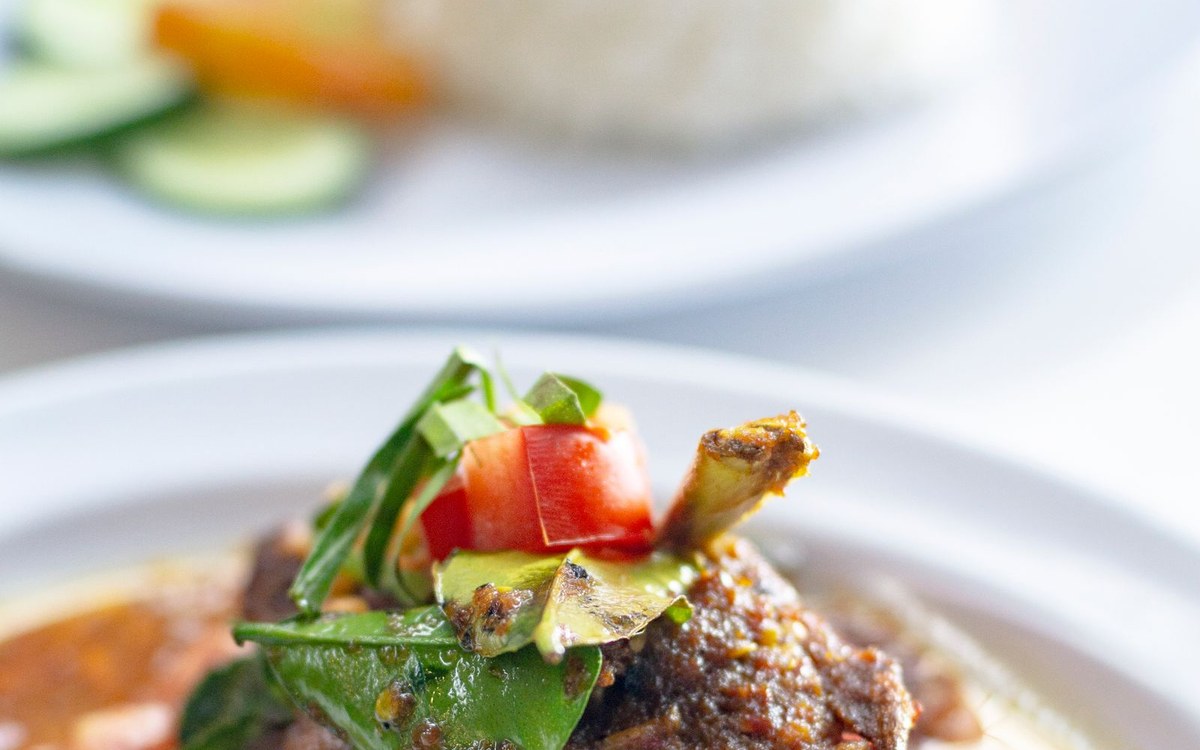
Rendang does not care about your schedule. Rendang comes from the Minangkabau people of West Sumatra in Indonesia, and it was built for celebrations, long gatherings, and cooks who understand that some food just takes the time it takes. Beef simmers in coconut milk and a fresh spice paste for hours. The liquid cooks down. The sauce gets darker and thicker. Near the end, the coconut oil splits out and the beef starts frying in that spiced oil. That last stage is where the magic lives, and you cannot rush your way into it.
The flavor is hard to describe until you have had it. It is warm from dried chiles without being a fire alarm. It is rich from coconut without being heavy or sweet. Lemongrass, galangal, turmeric, and lime leaves keep it bright underneath all that depth, so every bite tastes layered instead of muddy. The beef ends up tender enough to pull apart with a spoon, coated in a sauce so concentrated it is almost a paste. One plate of this over rice and you understand why people guard their family versions of it.
A few honest notes before we start. First, use beef chuck. Lean cuts dry out over a long braise, and rendang is a long braise. Second, full fat coconut milk only. The light stuff will not split and fry the beef properly, and that frying stage is the whole point. Third, clear your afternoon. Most of the cook time is hands off simmering, but the last half hour needs you nearby, stirring, because a sauce this thick can scorch if you wander off. Put on some music, pour yourself something cold, and let the pot do its work.
This makes a big batch on purpose. Rendang tastes even better the next day, after a night in the fridge lets the spices settle into the beef. Leftovers are not a compromise here. Leftovers are the plan.
Instructions
1
Make the kerisik first. Put the shredded coconut in a dry skillet over medium heat and toast it, stirring often, for 5 to 7 minutes until it turns a deep golden brown and smells nutty. Tip it into a mortar or a small food processor and pound or pulse it until it turns into a coarse, oily paste. Set it aside. This stuff adds body and a toasted depth you cannot get any other way.
2
Put all the spice paste ingredients in a blender or food processor with 3 tablespoons of water. Blend until smooth, scraping down the sides as needed. It should look like a thick orange paste and smell like it means business.
3
Heat the oil in a large heavy pot or Dutch oven over medium heat. Add the spice paste and fry it, stirring often, for 6 to 8 minutes until it darkens a shade, thickens, and the oil starts to separate around the edges. Do not skip this fry. Raw paste tastes harsh. Fried paste tastes like rendang.
4
Add the beef chunks and stir them through the paste until every piece is coated. Cook for about 5 minutes, letting the beef pick up the paste on all sides.
5
Pour in the coconut milk and stir well, scraping the bottom of the pot. Add the knotted lemongrass, lime leaves, cinnamon stick, tamarind paste, sugar, and salt. Bring everything to a gentle boil, then drop the heat to low so the pot holds a lazy simmer with the lid off.
6
Simmer uncovered for about 2 hours, stirring every 20 minutes or so. The sauce will thin out first, then slowly start to reduce and darken. The beef should be getting tender. If the pot ever looks dry before the beef is tender, splash in a half cup of water and keep going.
7
Stir in the kerisik. Keep simmering for another 30 to 45 minutes. This is the stage that needs your attention. Stir every few minutes and scrape the bottom, because the sauce is now thick enough to catch. You will see the oil split out and turn glossy, the sauce will go a deep mahogany brown, and the beef will start frying in that spiced oil. When the sauce clings to the meat instead of pooling in the pot, you are there.
8
Pull out the lemongrass stalks, lime leaves, and cinnamon stick. Taste and add salt if it needs it. Rest the rendang off the heat for 15 minutes, then serve it over jasmine rice with cucumber on the side and sambal for anyone who wants extra heat.
Moe Train's tip: Rendang rewards the cook who plans a day ahead. Make it, cool it, and refrigerate it overnight in its sauce. The next day, warm it gently over low heat and the flavor will be deeper and rounder than it was fresh off the stove. If you are serving a crowd, this is the move: zero stress on the day, and the best version of the dish on the table.